

Never lose the story of a single plant again
Think about the plants in your collection that mean the most to you.
The gift from a friend. The rare import you waited months for. The seed batch you nursed through that first tough summer.
Now imagine trying to answer, years from now:
- When exactly did I get this one?
- Which nursery or grower did it come from?
- What pot and soil mix was it happiest in?
- When did I last repot it – and into what?
- Which parent did this offset actually come from?
- How many seedlings survived from that sowing?
Most collectors start out saying “I’ll remember.”
Then the collection grows, labels fade, notebooks get messy, and spreadsheets fall out of date. The result? A collection full of beautiful plants… with their stories slowly slipping away.
That’s the problem CGS was built to solve.
CGS (Collect::Grow::Show) gives your collection a single, living record—from the day a plant joins your collection to repots, seeds, propagation, and yield, all the way to photo galleries that show its development over the years.
This article walks through how that works, step by step.
Your collection needs more than a label
Most systems stop at a name on a plastic tag.
But serious collectors know the real value is in the details:
- Exactly where a plant came from (nursery, collector, show, seed batch).
- When it joined your collection.
- The pot configuration that worked best.
- The soil recipe you used that year.
- The repot dates and how the plant responded.
- The seed source and sowing date for every batch.
- The propagation attempts, success rates, and final yield.
- The parent plant that each offset or propagated plant came from.
- A gallery of photos over the years that captures its development.
Trying to hold all of this in your head (or scattered across notes, photos, and spreadsheets) is exhausting.
And when things slip, you’re left with nagging questions:
“Am I really looking after this plant as well as I could?”
“Did I learn anything from the last time I tried this?”
CGS steps in as the quiet, reliable system in the background—so you can enjoy the plants, and it remembers the details.
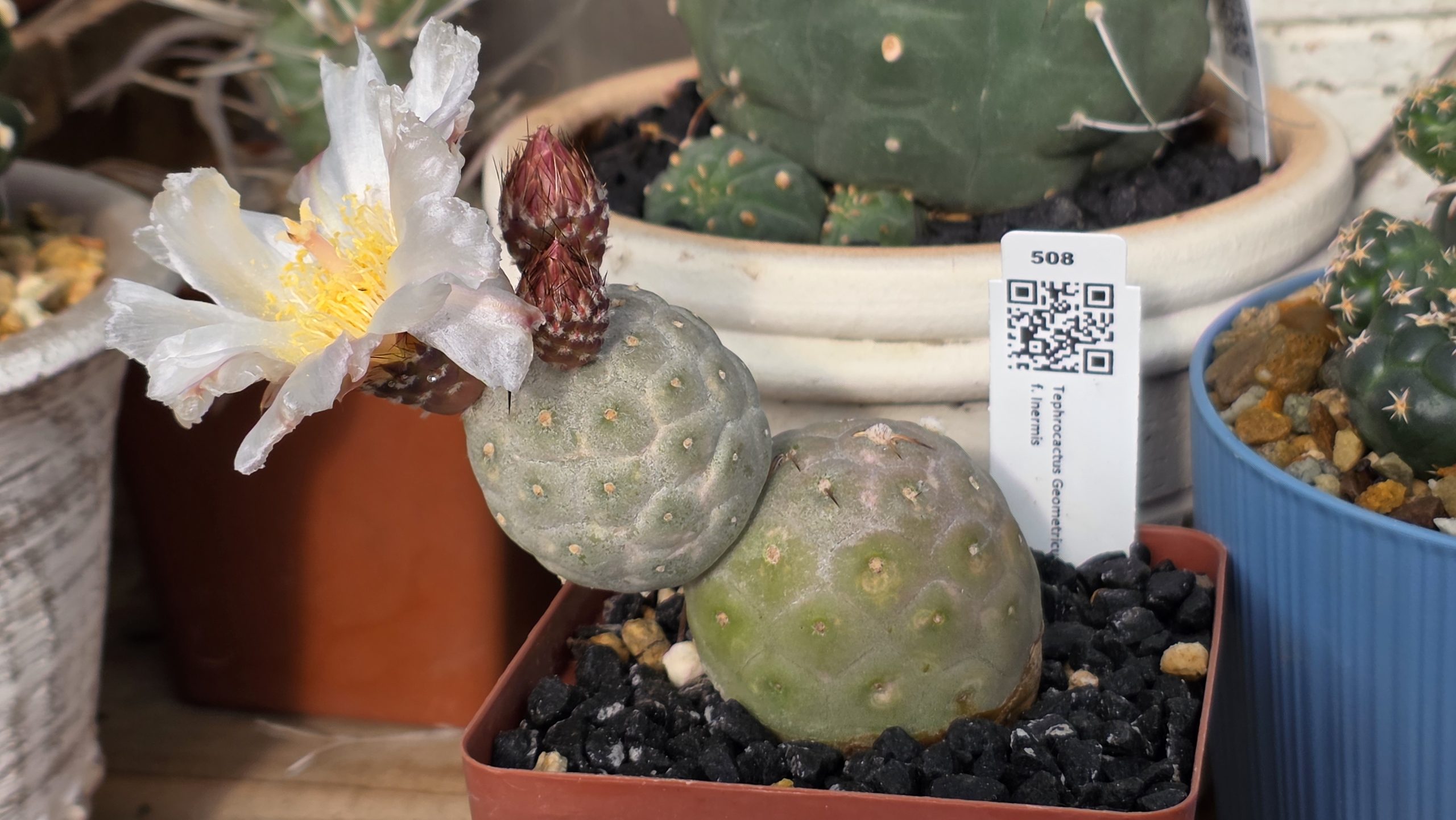
On CGS, those details stay tied to the plant’s label and QR code—see the CGS Labelling System for how the physical tags connect to your digital records.
CGS as your collection’s memory
You’re the collector; CGS is the quiet guide that keeps the details together so you can care for your collection with confidence.
Under the hood, CGS is a specialist record-keeping platform designed specifically for collectors of cacti, succulents, and rare plants. On the surface, it feels like this:
- Every plant has its own profile.
- Every important event has a place to live.
- Every piece of data you enter is linked, structured, and reusable.
Let’s walk through the journey of a plant in CGS.
1. When a plant joins your collection
Every plant starts as a record with a unique Plant ID (PID). From day one, CGS can capture:
- Date acquired
- Source (nursery, private grower, show, gift, seedling from your own batch, etc.)
- Price paid (optional)
- How confident you are in the identification
- Any early notes (damage, condition, special history)
Instead of a vague memory of “I bought this some time in 2022 from a guy on WhatsApp,” you have a clean, structured record.
Over time, that becomes incredibly powerful:
- You can see how long a plant has been with you.
- You can track which sources gave you the strongest plants.
- You start to see your collection as a timeline and a story, not a blur.
2. Care records: repots, pots, and soil mixes
A label might show a name.
CGS shows how you’ve cared for the plant over time.
For each plant, you can record:
- Repot dates – every time you move the plant into a new pot.
- Pot configuration – pot size, shape, and material (e.g. 90mm terracotta, 120mm plastic, clay bowl, etc).
- Soil recipe – the exact mix used: percentages of pumice, akadama, bark, grit, etc.
- Notes – observations after a change: “exploded with roots”, “too wet in winter”, “performed better in a narrower pot”, etc.
Together, this gives you something hobbyists rarely have:
a care history that you can actually learn from.
Instead of guessing:
“When did I last repot this?”
“What mix did I use on the plants that handled the heat best?”
You can open the plant’s profile and see it instantly.
And because CGS also tracks this across your collection, you can spot patterns:
- Which soil recipes are working.
- Which pot types your plants seem to prefer.
- How long your plants are happy in the same pot before slowing down.
3. Seeds: from source to sowing
For seed-based propagation, the details matter:
- Which species or cross is in each packet.
- Who the seed supplier was.
- When the seeds were sown.
- How many seeds were started and how many made it through.
- Notes about conditions (heat mat, humidity, light, etc).
CGS treats seed batches as first-class citizens, not an afterthought.
You can:
- Tie seed batches back to their source (commercial packet, your own plant’s seed, a swap, etc.).
- Record sowing date and initial counts.
- Track remaining seeds if you sow in stages.
So instead of “mystery seed box syndrome”, you have:
“This seedling came from Seed Batch SID-042, which was sown on this date, from that parent plant or supplier.”
4. Propagation and yield: from experiment to data
When you propagate, you’re effectively running experiments:
- Cuttings
- Offsets/pups
- Seedlings moved on
- Grafts
CGS lets you record each propagation effort and then track:
- Propagation date
- Method (seed, cutting, offset, etc.)
- Parent plant (so you always know where this plant came from)
- How many you attempted
- How many survived
- Final yield and success rate
- Status (active, completed, failed, etc.)
And here’s the crucial part: those yields link back into your inventory.
That means:
- New plants created from a propagation can be linked to the parent plant’s record.
- You can say, years later: “This plant is one of three surviving seedlings from that legendary sowing in winter 2025.”
- You can see which varieties propagate well for you and which don’t justify the effort.
Propagation stops being a blur of trays and labels…
and becomes a measured, learnable process.
5. Photo galleries: watch your plants grow up
Numbers and dates are powerful. But photos tell the emotional story.
Each plant in CGS has its own photo gallery, where you can:
- Upload photos over the years.
- Capture stages: newly acquired, first flowers, repots, stress colours, damage and recovery.
- See, at a glance, how the plant has developed under your care.
Instead of scrolling endlessly through your camera roll trying to remember which photo matches which plant, you have a curated, plant-specific timeline.
For a serious collector, this does two things:
- It gives you visual evidence that your care decisions are working.
- It turns your collection into a living portfolio you can be proud of.
All in one place: a single source of truth
The magic of CGS isn’t just that you can record all these things.
It’s that they’re all connected:
- A plant knows its species, source, acquisition date, pot, and soil recipe.
- That plant knows its propagation history, seed batches, and offspring.
- Each propagation effort knows its yield, and each yield can feed back into new Plant ID’s in your inventory.
- Every plant and process is backed by an image history.
You’re not juggling:
- One notebook for acquisitions
- A spreadsheet for repots
- Random notes for soil mixes
- A photo gallery on your phone
- Tags in the greenhouse that fade over time
You have one central system that quietly holds all the pieces together.
That’s where the “I can’t live without this” feeling starts to creep in—
because after using CGS for a while, going back to scattered records feels unthinkable.
Less admin. More time with your plants.
On the surface, record-keeping can sound like “more admin”.
In reality, CGS is designed to reduce mental load, not increase it.
Instead of:
- Trying to remember when you last repotted something,
- Guessing which soil worked best last summer,
- Forgetting which plant produced that special seed batch,
- Or losing track of which seedlings came from where,
You open the plant, seed, or propagation record… and it’s all there.
That frees up mental space for what you actually enjoy:
- Time in the greenhouse or garden
- Hunting for new species
- Planning propagation projects
- Watching your collection evolve, knowing you’re capturing its story properly
CGS becomes the quiet assistant in the background, so you don’t have to be “the admin person” and the grower at the same time.
Life with CGS vs. life without it
Without CGS:
- Faded tags and half-remembered names
- Old notebooks you’re scared to throw away
- Spreadsheets that were “up to date” three seasons ago
- Photos in your phone with no idea which plant is which anymore
- A nagging feeling that you’re losing the history of your collection
With CGS:
- Every plant has a clear timeline and identity
- You know where each plant came from and how long it’s been with you
- Repot dates, soil mixes, and pot changes are tracked and searchable
- Seed batches, sowing dates, and yields are measurable, not just “vibes”
- Propagation attempts are linked to parents with success rates you can improve on
- Photo galleries show the development of each plant over years
It’s the difference between a box of old photos and a carefully curated, living archive.
Your collection deserves this level of care
If you’ve ever felt:
- Overwhelmed trying to keep everything in your head
- Frustrated when you can’t reconstruct a plant’s history
- Or sad that you’ve “lost” the story behind a favourite plant…
…then you’re exactly who CGS was built for.
The platform doesn’t replace your instincts or your passion.
It amplifies them, by giving you a rock-solid memory to lean on.
So the next time you walk into your greenhouse or plant room and look over your collection, imagine:
- Knowing the story of every plant you touch.
- Seeing not just what it looks like today, but how far it’s come under your care.
- Having the confidence that every repot, mix tweak, propagation experiment, and seed batch is part of a clear, recorded history.
That’s what CGS gives you:
a system that honours your plants by honouring their stories.